

After Surgery

Post Operative Orthopedic Surgery Care
A successful orthopedic surgery recovery continues at home with careful rest, activity restrictions, medication, and follow-up care. At Ark Animal Hospital, we provide post-operative orthopedic surgery guidelines to help protect your pet’s healing process, reduce the risk of complications, and support a safe return to normal activity. By following your pet’s home care instructions and scheduled recheck visits, you can help give them the best chance for a smooth recovery.
Home Care After Orthopedic Surgery
Home care is an important part of your pet’s recovery from orthopedic surgery. Following these guidelines will increase the changes of a successful surgery.
- Limited activity is required. Do not take your pets for walks or allow him to go up or down stairs. Take him out on a leash outside to go to the bathroom. Do not allow him to run or play with other family members or pets.
- Your pet will need a quiet place to rest. Make sure that this is a place that does not require stairs to get to this place or to go outside.
- Use rugs with rubber backing to help your pet get up on wood, tile or slippery floors.
- Use easily washed padded bedding for your pet to sleep on.
- Your pet’s feeding amount will be reduced during this down time. With the limited activity many pets will gain weight during this time, so the amount of food offered is reduced.
- It is important to give all medications as directed. You will be sent home with pain medication and antibiotics. Many pets do not show they are in pain. It is easier to manage pain than to relieve pain.
- Follow rehabilitation guidelines as recommended.
Post-Operative Care & Recovery Questions
When does my pet need to return to the hospital?
You will need to return to the hospital at various times to have the healing process and the incision area checked. The first visit will occur 3-4 days after surgery to have the bandage removed and the incision area checked. The second visit is 2 weeks after surgery to have the staples removed and the incision checked. Eight weeks after surgery your pet will need to return for radiographs to check bone healing progress. By 16 weeks after surgery, most pets are fully weight bearing on the operated limb and exercise restrictions may be lifted at this time.
Surgical complications
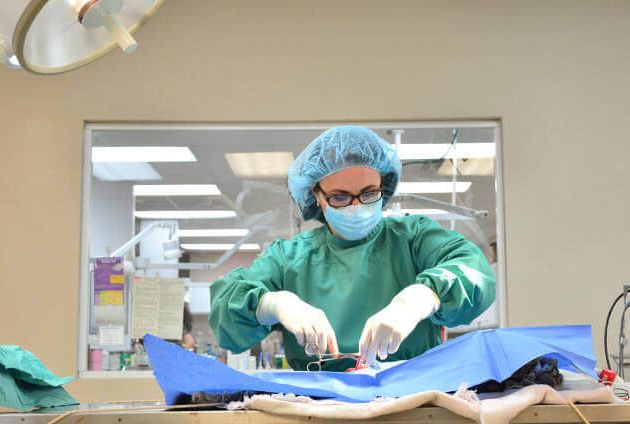
As with any surgical procedure, complications can arise. There is the risk with the anesthesia. To decrease the chance of any anesthetic complications, pre-surgical blood work is performed and anesthesia is tailored to each individual patient. Patients are given antibiotics to minimize the chance of any surgical site infection. All surgical equipment is sterilized prior to use and surgery is performed in the surgery room where caps, masks and gowns are worn.
Aftercare Complications
If your dog is receiving medications such as chemotherapy or steroids, the bone may not heal well, therefore it is imperative that you inform the surgeon prior to surgery that your dog is receiving these medications. Over activity in the postoperative period may also result in poor bone healing, loosening of the screws or breakage of the implant. In addition, if your dog falls, the tibia may fracture. Arthritis (bone spurs) is usually present at the time of diagnosis of a cruciate ligament rupture and likely will progress regardless of the surgical procedure performed.